Category: Books

  • Adventures in Hybrid Publishing

    Adventures in Hybrid Publishing

    The changes that have occurred in publishing over the past decade are pretty remarkable. I first wrote this post for Simon and Schuster about a year ago, and even more has changed in publishing in that time.
     

    book-genre


    Authors are no longer restricted by the old rules of publishing. You don’t need a literary agent or a traditional publishing deal to get your story into reader’s hands. E-readers have helped fuel a revolution, where an unknown author like Hugh Howey can become a New York Times Bestseller almost overnight. From Wattpad to Amazon, publishing has never been easier. But that doesn’t mean one method is better than the other. It simply means that authors and publishers have more options.

    Three years ago, when I was still a purely self-published author, New York Times bestselling author Bob Mayer told me that hybrid publishing was the future. At the time, I didn’t even know what that meant. But, that’s exactly what I became; by mixing and matching the strategies that worked best for me, I became a hybrid author. Two years later, with a series traditionally published under Simon451 (a digital-first imprint of Simon & Schuster) another series I’m self-publishing, and a third acquired by Blackstone Publishing, I found the right balance of freedom and control to survive as a full time writer.

    My publishing story started about four years ago. I had an unpublished manuscript that I’d been working on for years. I thought about querying agents or sending the book to a small press but after some consideration I decided to go with what seemed like the least painful method — I decided to self-publish.

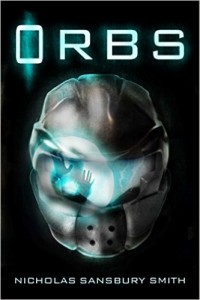
    This was one of the most important moments of my career. It opened a door to the world of self-publishing and while that novel didn’t do all that well, it paved the way for my next book, Orbs. Using the marketing knowledge I’d gained from my first novel and the advice of fellow self-published authors, I was able to successfully launch my second book. Two months later, Orbs was a breakaway hit on Amazon and a number one bestseller that attracted the attention of several publishers including Simon451.
    Orbs

    Now I was faced with an important dilemma. I wrestled with whether to continue to self-publish or make the leap to traditional publishing. It wasn’t until I asked myself an important question that I found my answer — what could Simon451 bring to the table that I wasn’t doing for myself?

    Sure, self-publishing allowed me the freedom of getting my stories out quickly. I had control over the marketing and price. But there were still obstacles preventing me from reaching the audience outside of Amazon. I thought a traditional publisher could help tear down those walls and help me reach those readers. But in addition to that, with professional editing and copyediting I would be able to improve my technical skills as a writer.


    Nick typing


    For that reason I decided to sign with Simon451. I knew that with the power of their editing and marketing teams my books could potentially reach an entire new level. My writing would improve and my books would reach more readers. Simon451 did just that. They put my Orbs series on every major e-reader platform, and their superb editing team has made me a stronger writer. Starting in July of 2016, the books are coming out in paperback.

    After signing with Simon451 I came to see the other side of publishing. My old editor calls the e-book revolution the Wild West. More publishing options means more authors. That also means more competition. In order to survive in this environment I knew I needed to adapt. I needed a flexible model that would allow me the freedom to get books out faster while having the support of a major publisher on other titles.

     

    Buffalo_bill_wild_west_show_c1899


    That’s why I returned to my roots after I completed the Orbs series by self-publishing the Extinction Cycle series. All five books are number one bestsellers on Amazon and the audiobooks are too, with Extinction Horizon hitting #1 in the audible store in 2015. This new series has allowed me the ability to self-publish every four or five months. In a little over a year, the series has sold over two hundred thousand copies.

    While writing the Extinction Cycle series I was also writing a new trilogy called Hell Divers. With the success of the Extinction Cycle, my agent was able to sell Hell Divers to another traditional publisher, Blackstone, the same company that published the Extinction Cycle audiobooks.

    I get questions all the time about how to survive as an author in the constantly changing world of publishing. My answer is to go hybrid, if you have that opportunity.  By keeping one foot in the self-publishing sphere, I’m able to maintain the breakneck pace necessary to compete with other eBook authors, and by keeping the other foot in traditional publishing, I’m able to work on slower-burn projects that might need extra attention like Hell Divers.

     

    20130207-KINDLE-OLD-BOOKS-031edit


    My ultimate goal is the same as most authors: to have my books in print and on bookshelves. There isn’t anything I can think of that’s much better in life than holding my book in paperback. But the path to print publication requires skills learned in both worlds, the skills I learned as a hybrid author. Now that is happening with both Orbs and Hell Divers.

    Publishing is continuing to evolve every day, providing endless possibilities for authors to bring their stories to life. Ultimately, I believe Bob Mayer is right. Hybrid publishing is the future for many. It may seem unconventional right now, but with the ever-changing landscape of publishing authors will be required to adapt in order to achieve their goals, just like I have.
     

    Nicholas Sansbury Smith

    Nicholas Sansbury Smith

    Nicholas Sansbury Smith is the bestselling author of the Orbs and Extinction Cycle series. He worked for Iowa Homeland Security and Emergency Management in disaster mitigation before switching careers to focus on his one true passion–writing. A three-time Kindle All-Star, several of Smith’s titles have reached the top 50 on the overall Kindle bestseller list and as high as #1 in the Audible store. Hell Divers, the first book in his new trilogy, will release in July 2016. When he isn’t writing or daydreaming about the apocalypse, he’s training for triathlons or traveling the world. He lives in Des Moines, Iowa, with his dog and a house full of books.

    If you’d like to hear more about Nick’s books, you can join his spam free mailing list here: eepurl.com/bggNg9
  • Telepathy – From Science Fiction to Reality

    Telepathy – From Science Fiction to Reality

    “Any sufficiently advanced technology is indistinguishable from magic.”

    Arthur C. Clarke


    During the Golden Age of science fiction, John W. Campbell, Jr.’s Astounding Science Fiction was a vanguard in popularizing stories that centered on humans with enhanced mental abilities, and how ordinary society might look at people with those abilities, notably with A.E. van Vogt’s serialized novel Slan and the similarly themed stories that collectively made up Henry Kuttner’s Mutant.


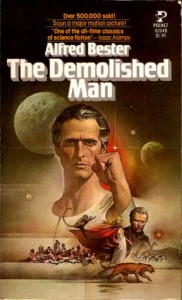
    Indeed, the first Hugo Award was given in 1953 to a novel that revolved around telepaths. The Demolished Man, by Alfred Bester, is a police procedural science fiction story set in a world where telepathy has become commonplace, although so-called espers have varying degrees of ability.


    The Demolished Man by Alfred Bester

    The Demolished Man by Alfred Bester


    That this work has become a landmark in the genre is evidenced by nods to his work, as in the television series Babylon 5, where the author lends his name to one of the primary protagonists, Psi Corps officer Alfred Bester, played by the iconic Walter Koenig from Star Trek (whose Vulcans were also able to mind-meld, to share thoughts, memories, and knowledge with others through physical contact).


    Today this melding of minds, this staple of science fiction, is coming closer to reality than many of us may realize.


    In his book The Physics of the Impossible, Michio Kaku, noted futurist and Professor of Theoretical Physics at the City College of New York, classifies three types of impossibilities. Class III impossibilities are what we normally think of as not possible: things that cannot become real, at least not according to our current understanding of science; these include perpetual motion and precognition. Class II impossibilities include things that may be realizable, but in the far future, such as faster-than-light travel.


    According to Professor Kaku, telepathy is a Class I impossibility. These are phenomena that don’t violate the known laws of physics, and indeed may become reality in the next century.


    A meeting of minds

    A meeting of minds


    Never mind the next century—some scientists believe the age of telepathy may be upon us.


    The first clue? That people lacking one or more of the normal five senses can now, in certain situations, be given them.


    Since the 1960s, around 350,000 people who were profoundly deaf or severely hard of hearing have been fitted with cochlear implants, providing them with a sense of sound where previously there was none. Essentially, a microphone picks up sounds, which are filtered by a speech processor and sent as an electronically coded signal to a transmitter behind the ear. This transmitter sends the signal to the subject’s brain through an array of up to twenty-two electrodes circling the cochlea, which then send the impulses through the auditory nerve system to the brain.


    Following European approval in 2011, the United States Food and Drug Administration in 2013 approved for use the first retinal implant. The system uses a video processing unit to transform images from a miniature video camera into electronic data, which is then wirelessly transmitted to a sixty-electrode retinal prosthesis implanted in the eye, replacing the function of degenerated cells in the retina. Although vision isn’t fully restored, the system allows those affected with age-related macular degeneration, or with retinitis pigmentosa—a condition which damages the light-sensitive cells lining the retina—to better perceive images and movement.


    Retinal implant

    Retinal implant


    Similar advances are being reported for the other three senses of touch, smell, and taste.


    But what about the sixth sense?


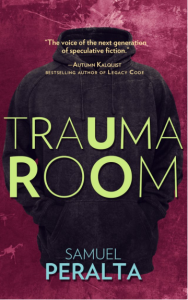
    In my own speculative fiction universe, electronically augmented telepaths make use of technologies akin to magnetic resonance imaging (MRI) to associate perceived images of neural activity with a subject’s memory palace in his brain. This is a key point for my conception of the protagonist of my short story Trauma Room, a man who can use augmented telepathy to traverse a subject’s thoughts and memories using the method of loci.


    Trauma Room by Samuel Peralta

    Trauma Room by Samuel Peralta


    Today, functional MRI has actually been used to sense words being thought by a subject, or to discern the images being formed in the brain as a subject watches a movie. It’s still very mechanical, matching monitored brainwave activity with a huge database of impulse responses to benchmark words or images, but it’s the same big numbers principle that enabled the IBM Deep Blue chess computer to win against then-World Champion Garry Kasparov in 1997.


    In the same year that The Demolished Man was published, Theodore Sturgeon‘s More Than Human also came out. It’s the story of several people with extraordinary abilities who are able blend their abilities together and achieve human transcendence. The same theme—of humans transcending ordinary humankind—is explored in Time is the Simplest Thing, by Clifford D. Simak. It can be argued that a similar sort of communal experience—if not transcendence—is already part of our experience, with the spread of the Social Web.


    It’s only a matter of time before all the input and output devices we have—keyboards, flat screens, heads-up displays—become obsolete. Why should you have to type or dictate information into a computer, when you can control it directly by thought? Why project information onto your eyes when you could send information directly into the brain? In time, many of us may be direct input/output nodes into the cloud.


    Science fiction?


    Direct brain interfacing

    Direct brain interfacing


    We live in a world where cochlear implants are already helping the deaf to hear, and retinal implants are beginning to help the blind to see.


    We live in a world where smartphones and connected wearable devices—watches, glasses, health and fitness monitors—simultaneously receive and broadcast information to and about us through the cloud of the Internet.


    We live in a world where deep brain stimulation is routinely used in therapies to address Parkinson’s disease, where implants in the brain allow people to bypass a broken spinal cord and move hands, arms, limbs with the power of thought.


    Augmented reality heads-up display

    Augmented reality heads-up display


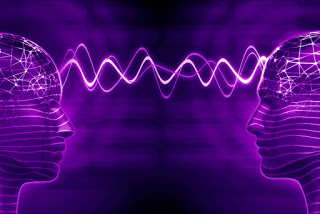
    In fact, we live in a world where real telepathy has already been achieved. A team at Duke University in North Carolina has, for the first time, demonstrated a direct communication interface between two brains. In the Duke experiments, two thirsty rats are placed into separate cages. They cannot see or hear each other, but their brains are wired together via electrode implants in their motor cortices. Each rat will be rewarded with a sip of water if it pushes the correct one of two levers. In the first rat’s cage, a light comes on above the correct lever to let the rat know which lever to push—but there is no such indicator in the second rat’s cage.


    The experiment, then, measures whether, when the first rat pushes the correct lever, it sends a brain-initiated signal to the second rat, which must then correctly interpret the signal it experiences in its own brain, and push the correct lever.


    The technology is simple: implanted electrodes capture the signals from the firing of the neurons in the motor cortex, translate them into binary code, and sends the signal—via a wire, wirelessly, or via the Internet to another location—into the electrodes in the other brain, which translates it back into neural signals.


    Sheer chance would have the second rat pushing the correct lever 50% of the time. In fact, the rat chose the correct lever between 60% and 85% of the time. This was true even when one animal was in North Carolina and the other was in Brazil.


    How much longer before what you read in the following pages is no longer science fiction?


    The Future of the Mind by Michio Kaku

    The Future of the Mind by Michio Kaku


    In The Future of the Mind, Professor Kaku notes, “We have learned more about the brain in the last fifteen years than in all prior human history, and the mind, once considered out of reach, is finally assuming center stage.”


    Science fiction writers peer into possible futures, using a literary form of precognition, as it were. And so we follow that grand tradition, celebrating this a new Silver Age of fiction, an age of online publishing and digital books, an age where we are surrounded by wonderment and wonders, where science, in many ways, has become magical.


    SAMUEL PERALTA is a physicist and storyteller. An Amazon bestselling author, he is also the creator and driving force behind the Future Chronicles series of speculative fiction anthologies, with 14 consecutive titles ranking at the top of the Amazon SF Bestseller lists, several hitting the overall Amazon Top 10 Bestsellers list. His own work has been recognized in Best American Science Fiction and included in the author community anthology for the John W. Campbell Award for Best New SF Writer.

    Samuel Peralta

    Samuel Peralta, creator of The Future Chronicles

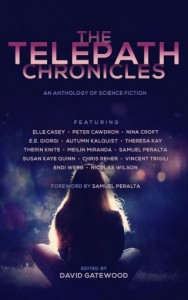
    This article was first published, in slightly different form, as the Foreword to The Telepath Chronicles

    Various_TELEPATH_CHRONICLES_EbookEdition-320x512

    The Telepath Chronicles – part of The Future Chronicles anthology series


  • Worldbuilding in Science Fiction and Fantasy

    Worldbuilding in Science Fiction and Fantasy

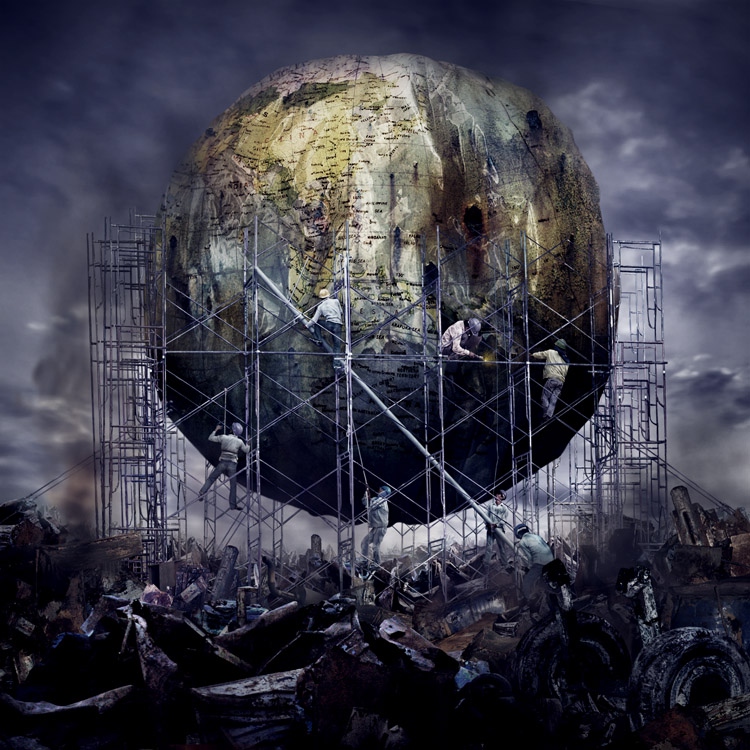
    Worldbuilding.  It’s a term that gets bandied about quite a bit when discussing fiction, especially in genres like science fiction and fantasy, but for all the endless times it is repeated, I think sometimes the importance is overlooked.worldbuilding

    It’s very fashionable to say things like, “character development is the important thing,” or “it’s the story that matters.”  And, of course, those things are absolutely essential.  But they’re not the whole story.  Not by a longshot.  Not in science fiction or fantasy.

    A work of historical fiction set, say, during the American Civil War doesn’t need worldbuilding…it’s world is the world, and beyond pointing out some historical facts the reader might not know, the author can focus almost solely on characters and storyline.  But science fiction and fantasy demand more.  These stories take place in worlds that are the creations of their authors.  They may be set in the near future, based heavily on the real world, or they may be wildly different (a galaxy far, far away), but either way, the reader needs to understand this setting, and the only way that’s going to happen is if the author fleshes it out.

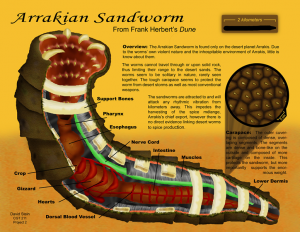
    Imagine a work like Dune, without the immense detail of the empire, stripped of the customs, institutions, and history so carefully laid out by the author.  What is left?  A good story, some well-developed characters?  Yes, perhaps.  But an enduring classic of the genre? Doubtful.sandworm

    Or Asimov’s Foundation series…with its galactic empire and its ‘world as one giant city’ capital.  The characters come and go in what is mostly a series of short novellas, but the overall plot of the fall of empire ties them all together.michael-whelan_isaac-asimov_foundation

    On the fantasy side, could there be a better example than the Lord of the Rings?  The three books cover little more than a single year’s activity, yet Tolkien’s work wouldn’t be the classic it is without the massive worldbuilding that gives us thousands of years of fictional history interspersed with a few months of real time action.lotr

    In science fiction and fantasy, the setting is like a character itself, often as much a part of the story as any hero and villain.  When I think of the books that have resonated with me in my forty-odd years of reading science fiction and fantasy, it is those that offered rich worlds in which I could lose myself that became the favorites I pull out every couple years to reread.

    Writers pursuing effective worldbuilding sometimes get blindsided by terms like “infodump,” and efforts to show the reader the true vision of a fictional universe often falter on such endless attempts to oversimplify good writing into arbitrary ‘rules’ and nonsensical little blurbs like, ‘show, don’t tell.’  Should a book start with an encyclopedia-like multi-page blast of pure background information.  No, not usually at least.  But is it important to share the true scope and vision of a fictional universe?  Absolutely.  Do readers want to know about these worlds their favorite authors create?  Definitely.

    There is no question that worldbuilding has to be done well, subtly, and not like a tank smashing through the wall.  Information needs to be doled out slowly, steadily, not in one massive torrent.  In a series it can come over several books.  But when it is done, and done well, the rewards are enormous, both to the author and to the reader.  The best fictional universes take on lives of their own, and they begin to feel real, at least to the readers who become ever more immersed in the escape they offer.

    As an author, more often as not, I’ll begin a new project with a clearer idea of the setting and the realities of the universe than the characters themselves.  I want my heroes—and my villains and bystanders too—to feel like they’re from that setting, and not some generic creations I cooked up and dropped in…which is why worldbuilding remains the core of my writing process, and always will.

    I’d like to add a note on another kind of worldbuilding, the kind that is behind this web site.  This is my first blog post for DiscoverSciFi, and I’m very excited to continue to share ideas and motivations with all of you.  I’ve got a long list of topics for future posts, and I know my co-author partners here do as well.

    One of the things I love about participating in something like DiscoverSciFi is the chance to create another way to reach readers.  Authors today have the opportunity to be closer to their readers than ever before, and I think this is a great thing for publishing in general.  I get a lot of emails from fans, and I answer them all.  There is no substitute for input from those who read and enjoy your books, and no better source for new ideas where to take a story than those from fans.  I’m excited to see where this DiscoverSciFi journey takes us.  I’m sure it will be a great ride!

    Jay Allan

    jay@jayallanbooks.com